Roofing blog
What to Do When Your Roof Leaks During a Storm
November 26, 2026 · Roofing Guides
The first steps indoors, what to leave alone until the weather clears and what to record for the roofer and your insurer.
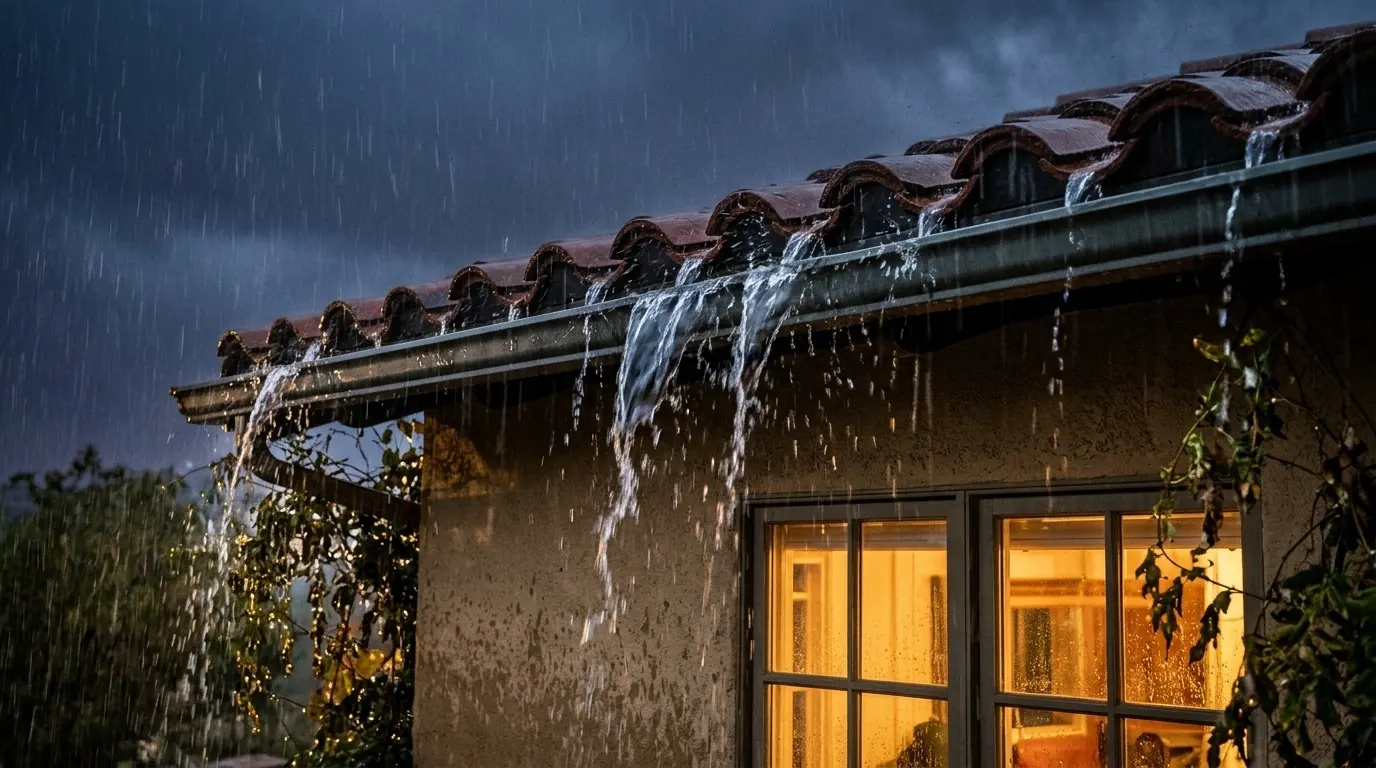
When water comes through the ceiling in the middle of a storm, the aim is simple: keep people safe, slow the damage indoors and arrange help. The roof itself can wait until it is safe to work on.
First, protect people
- Move people and pets out of the affected room.
- Keep away from wet outlets, switches, fixtures and appliances. Turn off power to the area only if you can do it from a dry spot.
- Stay out from under a ceiling that sags or bulges.
- If you smell gas, see sparks or smoke, or part of the structure has moved, leave and call 911.
- If power lines are down outside, stay far away and report them to the utility or 911.
Do not go on the roof
A wet roof is slick, and wind can throw a person off balance. Tile can break underfoot. Lightning adds another danger. Placing a tarp is work for someone with the right footing and fall protection, once conditions allow it.
Limit the damage indoors
- Set buckets or bins under drips and empty them before they fill.
- Move furniture, electronics, rugs and papers out of the wet area.
- Cover what you cannot move with plastic sheeting.
- Lay towels where water spreads across the floor.
- Once the area is safe and dry enough, open doors and run ventilation to help drying.
A bulging ceiling holds water. Leave it to a qualified person instead of cutting or poking it yourself, because the drywall can collapse.
Record what happened
Take dated photos and short videos of drips, stains, damaged belongings and anything you can see outdoors from a safe place. Write down when the leak began and what the weather was doing. Keep receipts for supplies and temporary work. If you may file an insurance claim, contact your insurer early and read what your policy asks you to do. Coverage is decided by the insurer and the policy, not by this site.
Arrange help
Ask for emergency roof repair when water is actively getting in, a section of roofing has come off or a branch has struck the roof. Give your ZIP code, the type of roof if you know it, where water is showing and whether anyone is at risk. Arrival times depend on the independent provider and on the weather, so ask for a realistic window.
What temporary work can and cannot do
A tarp or a temporary seal is meant to hold off more water for a short time. It is not a finished repair. Ask what was covered, how long it is expected to hold and what the permanent fix involves. Get the temporary work and the later repair described in writing.
After the weather clears
Have the roof inspected even if the dripping stopped. Water may still be sitting in insulation, decking or wall cavities. Damp materials can grow mold, so ask whether a separate drying or mold specialist is needed. For the permanent fix, see roof leak repair and storm damage roof repair. The guide on finding a roof leak from indoors explains what to note for the roofer.
Watch for pressure to sign quickly
After a big storm, people may knock on doors offering roof work. Take your time. Ask for a written scope, check the California license with the Contractors State License Board, ask for proof of insurance and read any agreement before signing, above all one that involves your insurance claim. You can also check which California cities are listed here.
Need help now?
Send the request form to reach a licensed and insured independent roofing provider. See all services and California service areas.