01What is roof replacement?
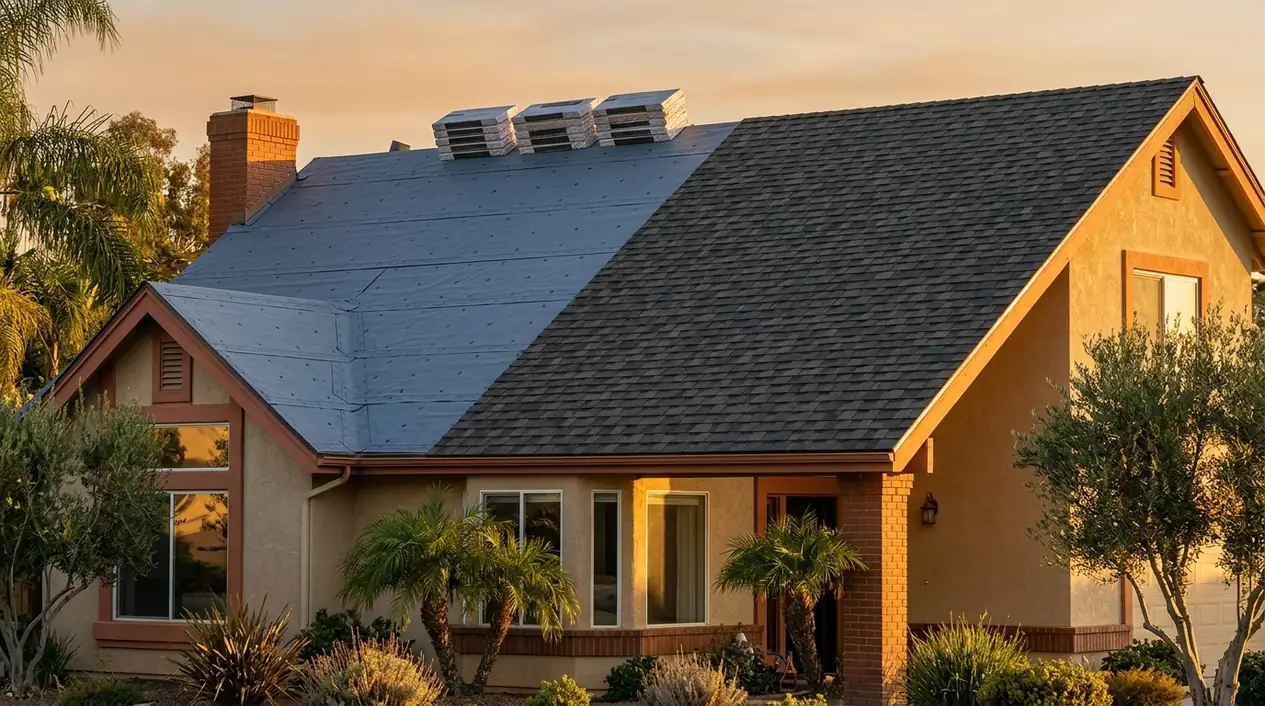
Roof replacement, also called reroofing, installs a new roofing system in place of a worn one. A tear-off removes the old covering down to the roof deck. An overlay places new material over a layer that is already there, where the material, roof condition and local rules allow it.
02When replacement is worth discussing
Repeated leaks, widespread curling or cracking, brittle underlayment, sagging decking and large storm losses are common reasons. Age alone is not proof; condition matters.
03Comparing roofing materials
Composition shingles, clay and concrete tile, metal panels and low-slope membranes each differ in weight, fire rating, heat behavior and upkeep. A heavier material may need a structural check. Some California locations require a particular fire rating or reflective cool roof product.
04What to get in writing
Compare quotes line by line.
- Material names and fire rating
- Tear-off or overlay
- Decking repair terms
- Underlayment, flashing and ventilation work
- Who arranges permits
- Schedule, cleanup and the provider's warranty terms
05Parts of a new roofing system
Ask what is included for each layer, because two quotes with the same shingle or tile can differ a lot underneath.
- Roof deck inspection and sheathing repair
- Underlayment and leak barriers at valleys and edges
- Drip edge, step flashing and counter flashing
- Shingles, clay tile, concrete tile, metal panels or membrane
- Attic ventilation: intake and ridge or roof vents
- Skylight and chimney flashing, cleanup and disposal
06What affects the cost of roof replacement
Roof size measured in squares (one square is 100 square feet), material, pitch, number of stories, layers to remove, decking repairs, structural needs for heavier materials, permits and disposal all change the price. The provider gives the quote.
07Reroofing options for California homes
Asphalt composition shingles are a common choice for pitched roofs. Clay and concrete tile suit many Spanish and Mediterranean style homes but add weight. Standing seam metal sheds water quickly and handles sun well. Low-slope sections usually need a membrane such as TPO or modified bitumen instead of shingles.
A roofing company can explain how each option affects weight, ventilation, appearance and upkeep on your house.
08What happens during a roof replacement
A typical reroof follows a clear order: protect the yard and openings, remove old material where required, inspect the roof deck, repair damaged wood, install underlayment and flashing, set the new covering, then clean up and complete any inspection.
Weather and decking repairs can change the schedule, so ask the roofing contractor how changes are priced and approved.
09Questions for a roofing company before you sign
Ask for the license number, insurance proof, material names, underlayment type, flashing plan, ventilation changes, permit responsibility, payment schedule and warranty terms in writing.