Roofing blog
How to Check for Roof Storm Damage From the Ground
November 26, 2026 · Roofing Guides
A walk around without a ladder after wind or heavy rain: the yard, the roof edge, the ceilings and the photos worth keeping.
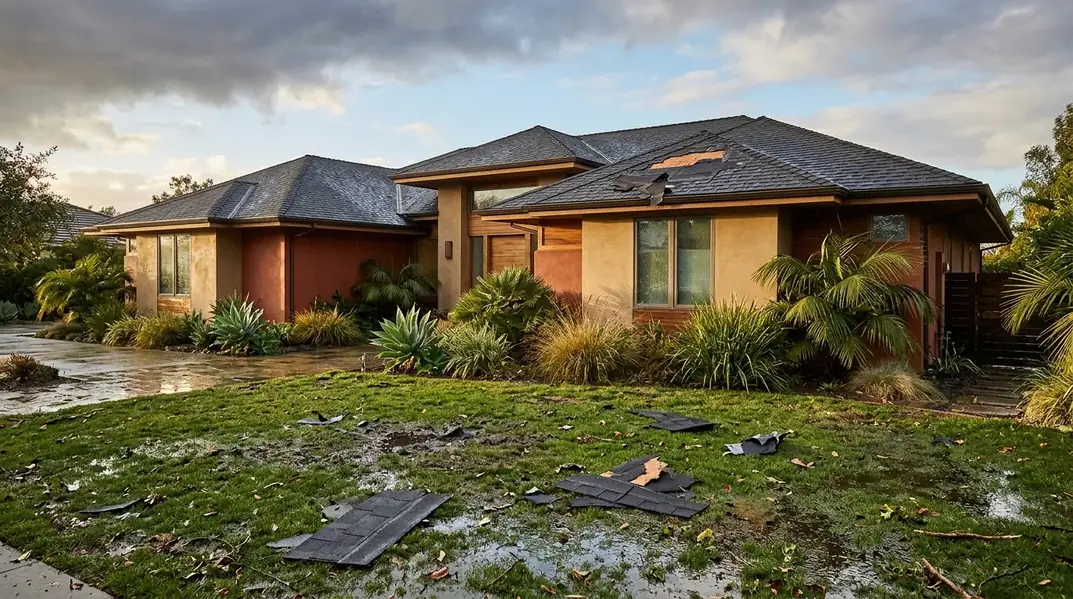
After strong wind or heavy rain, you can learn a lot about your roof without leaving the ground. This walk around will not replace an inspection, but it helps you spot warning signs early and describe them clearly.
Wait until it is safe
Start only after the storm has passed and there is enough light. Look for downed power lines, hanging branches, loose roofing and unstable fences before you walk close to the house. Stay away from any line on the ground and report it to the utility or 911. Leave ladders and the roof alone.
Walk the yard
Debris can tell you what came loose.
- Shingles or shingle tabs on the ground
- Broken pieces of clay or concrete tile
- Bent metal flashing, drip edge or vent covers
- Pieces of fascia, gutters or skylight covers
- Piles of shingle granules near downspouts, which can also come from ordinary wear
Look at the roof from a distance
Stand back far enough to see each slope. Binoculars or a phone camera with zoom can help. Look from more than one side, since wind damage may show on only one.
- Missing, lifted or creased shingles
- Tiles that are cracked, shifted or out of line
- A ridge cap that has gaps or loose pieces
- Branches resting on the roof or fresh gouges
- Dips or a sagging roofline that was not there before
- Torn membrane or standing water on a flat roof you can see from a safe window or balcony
Check gutters, edges and walls
From the ground, look for gutters pulling away, downspouts blocked or knocked loose and water marks down the siding or stucco. Check under the eaves for stains or peeling paint.
Check indoors too
Walk through every room, closets included. Look for new stains, bubbling paint, damp drywall or a musty smell. If it is safe to enter the attic, use a flashlight to look for wet wood or daylight showing through, and step only on joists. The guide on finding a roof leak from indoors covers the attic check in more detail.
Photograph what you find
Take wide shots that show the whole side of the house and closer shots of each problem. Keep the original files so the dates stay with them. Photos you already have from before the storm can help show what changed. If you may file a claim, contact your insurer and follow the steps in your policy. The insurer decides what is covered.
When to call a roofer
Ask for storm damage roof repair if you find missing or broken roofing, damaged flashing, a branch strike or any sign of water indoors. A sagging roofline or active water entry calls for emergency roof repair, and anyone at risk should leave the area. Some damage cannot be seen from the ground, so ask for an inspection after a severe storm even when the walk around looks clean.
Choosing who does the work
Ask for a written description of the damage with photos, the proposed work and the price. Check the roofer's California license with the Contractors State License Board and ask for proof of insurance. If the damage is wide, the guide on repair or replacement can help you weigh the options. To see where requests are covered, visit the California service areas page.
Need help now?
Send the request form to reach a licensed and insured independent roofing provider. See all services and California service areas.